

HomeSpec Waterproofing and Foundation Repair Before & After Photos
Click on a photo to enlarge.
Severe Basement Leak Fixed in Ypsilanti, MI with Waterproofing Products


A couple in Ypsilanti, MI struggled with every basement owner’s nightmares, cleaning up flood waters in the middle of the night. During a massive line of storms, a crack in the basement wall became a water spout. They were left cleaning up the water until 2 a.m. The couple has lived in this home for the last 11 years and they plan on it being their forever home. As such, they wanted to take care of it and protect their items stored in the basement. They called HomeSpec Waterproofing and Foundation Repair for a free estimate.
Erik, a senior project manager for HomeSpec, went out to inspect the home and discuss the couples’ concerns. Aside from wanting to stop the leaks, they were also concerned about having bad allergies. After learning the situation firsthand, Erik was able to offer a repair plan. He proposed installing an interior drainage system using WaterGuard®, a sump pump, and a SaniDry Sedona Dehumidifier. This would then be connected to a new sump discharge and dry well, a type of water basin. The family was happy to hear about this combination of products and even happier after foreman Brandon and his team installed them.
CleanSpace Encapsulation Installed in Ypsilanti, MI, Crawl Space
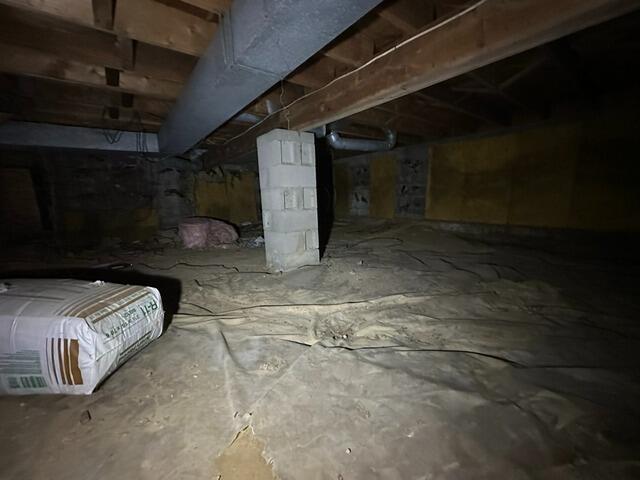
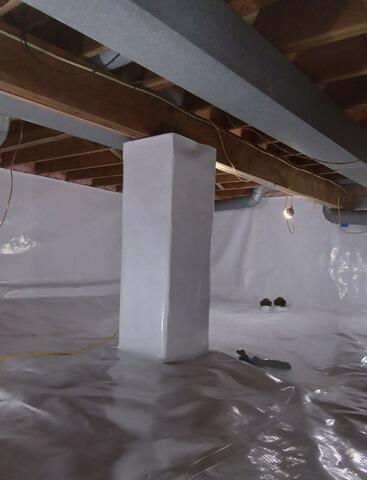
Homeowners in Ypsilanti, MI, had been experiencing cold floors throughout their home and musty smells they could not trace. They had no intention of moving but wanted to resolve these problems so they could enjoy their home. They called HomeSpec looking for a solution, and HomeSpec sent senior project manager Zach to inspect the home.
After Zach completed a full inspection, he concluded that their issues were caused by the crawl space. He explained to the homeowners that their crawl space was not properly equipped and was causing the cold floors and musty smells. Zach proposed that, to keep these issues from getting worse, they should have CleanSpace® Crawl Space Encapsulation System installed. This would add a layer of protection throughout the crawl space, preventing water leakage, which had been the root of the problem. Once the homeowners agreed to this plan, a team led by Jim quickly and efficiently completed the project. The homeowners were pleased with the outcome and glad to have an enjoyable living space once again.
Bowing Basement Walls Stabilized in Ypsilanti, MI


An Ypsilanti, MI homeowner wanted to sell their house. Unfortunately, no one was purchasing due to the condition of the foundation. There were cracks throughout the basement walls and they were bowing, showing the foundation was unstable. This homeowner was uncertain about what the options to fix bowing walls were and wanted an expert opinion. They scheduled an appointment with one of HomeSpec’s senior project managers, Jeremiah, to learn more.
When Jeremiah arrived for the free inspection, he conversed with the homeowner about their concerns and goals. He then jotted down notes on the condition of the foundation walls, including measurements and his ideas for solutions. He returned to the homeowner to construct a repair plan together. They ultimately decided that installing the PowerBrace™ Wall Repair System would be the best to ensure the foundation was stabilized. These steel beams would prevent the bowing basement walls from moving further. A foreman named Jon led a HomeSpec crew in the installation and a plumber named Rick adjusted any pipes that aligned with the repair plan. The homeowner was happy with the completed project!
Musty Crawl Space Encapsulated in Milford, MI


These homeowners were experiencing a strong, musty smell wafting throughout their home. They did a Google search and saw that it could be coming from underneath the home. That's when they checked their crawl space and indeed, it was very damp.
Our team encapsulated the crawl space and installed a dehumidifier to solve this problem. The dehumidifier will control the moisture and prevent mold from growing. The smell was ultimately eliminated and the homeowners were happy with their new dry crawl space!
Interior Drainage System Installed in Milford, MI


A Milford, MI homeowner was experiencing water in their basement during heavy rains. They had also noticed cracking in the foundation walls. They had been in the home for nearly ten years and wanted to ensure it was taken care of if they decided to sell in the future. The homeowner reached out to HomeSpec Waterproofing and Foundation Repair to inquire about a free inspection. After speaking with the call center team, they scheduled an appointment with a senior project manager named Erik.
Erik visited the home and investigated where the water was entering from as well as any possible structural issues. After a thorough analysis, he returned to the homeowner to discuss a repair plan that fit their needs. Erik suggested installing an interior drainage system using WaterGuard® as well as installing a new basin. The homeowner agreed to this plan and a team was scheduled out to complete the work.

Proudly Serving Ann Arbor, Westland & Metro Detroit
We serve the following areas
- Addison
- Adrian
- Ann Arbor
- Azalia
- Blissfield
- Bridgewater
- Brighton
- Britton
- Chelsea
- Clayton
- Clinton
- Cohoctah
- Deerfield
- Dexter
- Dundee
- Fenton
- Flushing
- Fowlerville
- Gaines
- Gregory
- Hamburg
- Hartland
- Howell
- Hudson
- Jasper
- Lakeland
- Lambertville
- Linden
- Manchester
- Manitou Beach
- Milan
- Montrose
- Morenci
- Onsted
- Ottawa Lake
- Palmyra
- Petersburg
- Pinckney
- Riga
- Saline
- Samaria
- Sand Creek
- South Lyon
- Swartz Creek
- Tecumseh
- Temperance
- Tipton
- Weston
- Whitmore Lake
- Ypsilanti